


We understand being a pet parent comes with a lot of responsibility, especially when your pet has an emergency. So, we want to ensure you know some common first-aid tips that can make all the difference between a scary situation and a safe recovery. Below are the Top 7 Pet First Aid Tips we want to share with every pet parent!
REMEMBER
An injured pet will be in pain, fearful, even confused, so follow these essential tips to protect yourself:
- Do not attempt to hug an injured pet.
- Keep your face away from your pet’s mouth until a muzzle is in place.
1. A Pet First Aid Kit
A well-stocked, waterproof first aid kit is essential for every pet household. You can purchase ready-to-use kits, or you can make your own. A first aid kit should, at a minimum, include:
- Bandages (non-stick).
- Gauze pads/roll. (A roll can also be used for muzzling.)
- Clean towels.
- Adhesive tape or self-adhering nonstick tape.
- Tweezers.
- Saline solution for cleansing wounds.
- Small flashlight.
- Hydrogen peroxide (for inducing vomiting, with vet approval).
- Digital thermometer.
- Muzzle (even the calmest pets may bite when injured, but do not muzzle if they are vomiting).
The following should also be included in your first aid kit:
- Critical phone numbers for your vet, local emergency hospital, and poison/animal control. Save these numbers on your phone, too.
- A copy of your pet’s medical records and any medications they take.
Always store this kit in an easily accessible location, check its contents regularly, and replace anything when depleted or expired. (Source: ASPCApro.org)
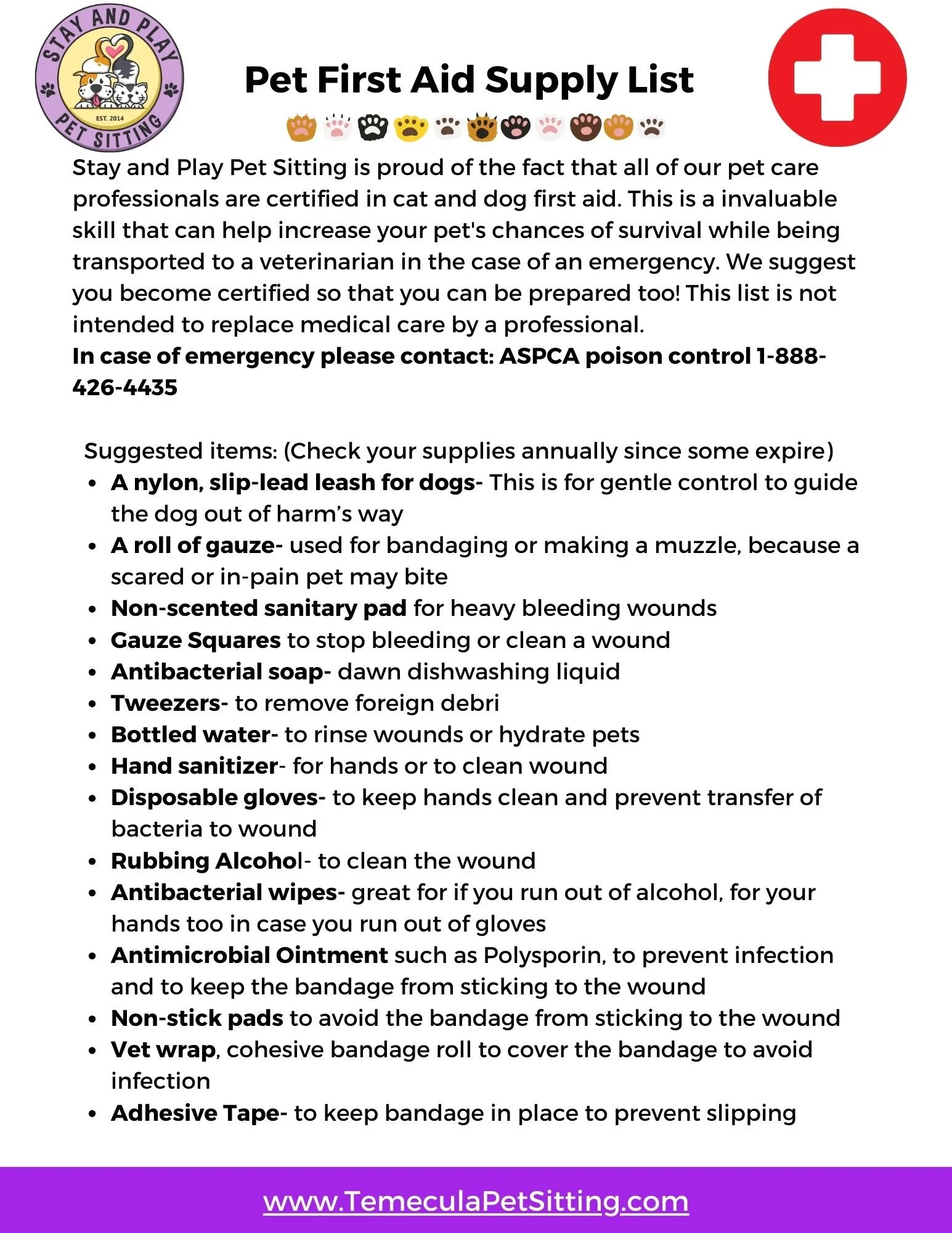
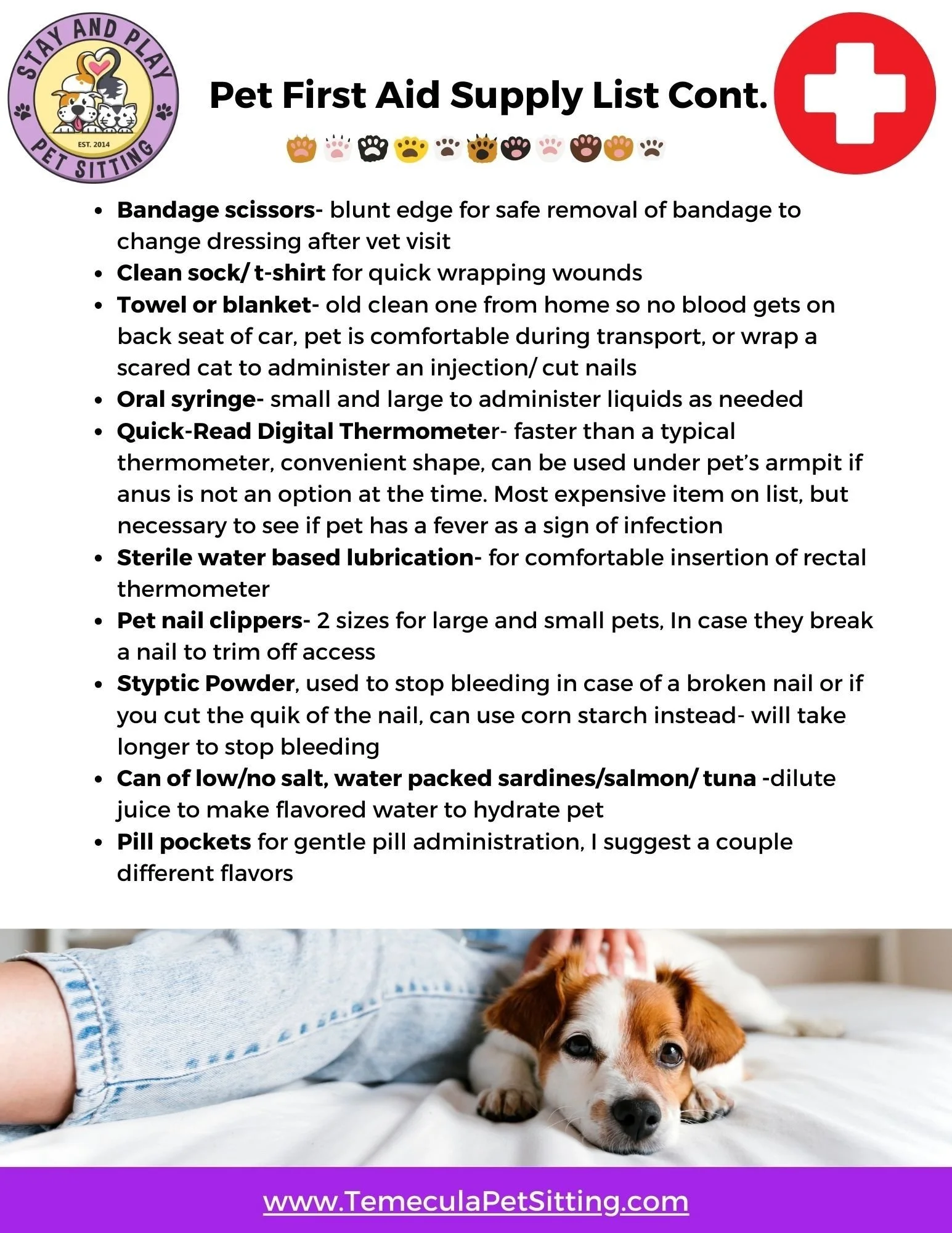
All Stay and Play Pet Sitter are cat and dog CPR and First Aid Certified and carry a First Aid Kit with them at all times for emergencies.
2. CPR and Your Pet
CPR (or cardiopulmonary resuscitation) for pets can be life-saving when time is of the essence! The steps include:
- Check for breathing and a pulse.
- No pulse or heartbeat? Begin chest compressions and rescue breaths.
- Continue with 30 chest compressions and two rescue breaths until your dog or cat begins breathing again.
This technique can vary depending on your pet’s size, so it’s crucial to consult with your vet for guidance. (Source: RedCross.org)
How to Perform CPR (Dogs and Cats)
Video: How to Perform Pet CPR

3. Stop Bleeding
Stopping your pet’s bleeding quickly is crucial. Apply pressure using a clean cloth or nonstick gauze pad, and elevate the injured area if possible. If the bleeding doesn’t stop within 10-15 minutes, head to the vet immediately! (Source: VCAHospitals.com)
Pet Wound Care Guide
4. Handling Heatstroke
Pets, especially dogs, are prone to heatstroke in hot weather. Symptoms include excessive panting, drooling, weakness, or even collapse. Immediately move your pet to a cooler area, apply cool (not cold) water to their body, and offer small amounts of water to drink.
DO NOT submerge an overheated dog in cold or ice water. Doing so will shock the heart, constrict the blood vessels, and trap heat in the body. (Source: AnimalHealthVetClinic.com)
Dog Heatstroke Treatment
5. Removing Ticks
Ticks can carry serious diseases, so remove them quickly with these steps:
- Use fine-tipped tweezers (or a tick removal tool shown below) to grasp the tick’s head or mouth as close to your pet’s skin as possible.
- Pull straight upward with steady pressure without twisting or squeezing. Clean the area (soap and water or an alcohol-based sanitizer) and monitor for 30 days. (Source: American Kennel Club Canine Health Foundation)
How to Remove Ticks from Pets

6. A Choking Pet
If your pet is:
- Gasping.
- Struggling to breathe or not breathing.
- Pawing at their face.
- Acting frantic or panicked, they may be choking.
First, check for any visible objects in the mouth.
Try to sweep the object out of the throat/mouth with your hand or tweezers. Be careful not to push it further into the throat.
You may need to perform the Heimlich maneuver if you can’t dislodge the object. (Source: PetMD.com)
Video: Heimlich Maneuver for Pets
How to Handle Choking Pets
7. Poisoning and Toxicity
Ingesting something toxic is a common pet emergency. If you suspect your pet has been poisoned, either by ingesting a harmful substance or coming into contact with one, call your vet or a pet poison hotline immediately!
DO NOT give any home remedies unless advised by a vet; this could worsen the situation.
NEVER induce vomiting without your vet’s approval. Hydrogen peroxide can be used in specific amounts
for dogs (NOT cats!) to induce vomiting, but incorrect dosages can be harmful.
24/7 Pet Poison Helpline: 855-764-7661 (An $85 incident fee applies)

Conclusion
Pet first aid is all about being prepared and staying calm during emergencies!
Knowing these essential First Aid tips will also make a huge difference!
American Red Cross: Cat & Dog First Aid Training
Download the Red Cross Pet First Aid App for expert help at your fingertips!

All Stay and Play Pet Sitter are cat and dog CPR and First Aid Certified and carry a First Aid Kit with them at all times for emergencies.