


If you’ve ever tried to figure out the “right” way to train your dog, you already know: it’s a rabbit hole. There’s a sea of opinions online…some say only use treats, others say never use tools, and the debates can get heated fast.
As a trainer, and more importantly as a dog parent, I’ve learned that there is no single “right” way to train every dog. That’s why I use what’s called balanced training, a flexible, dog-specific approach that puts the dog’s needs first, not the method.
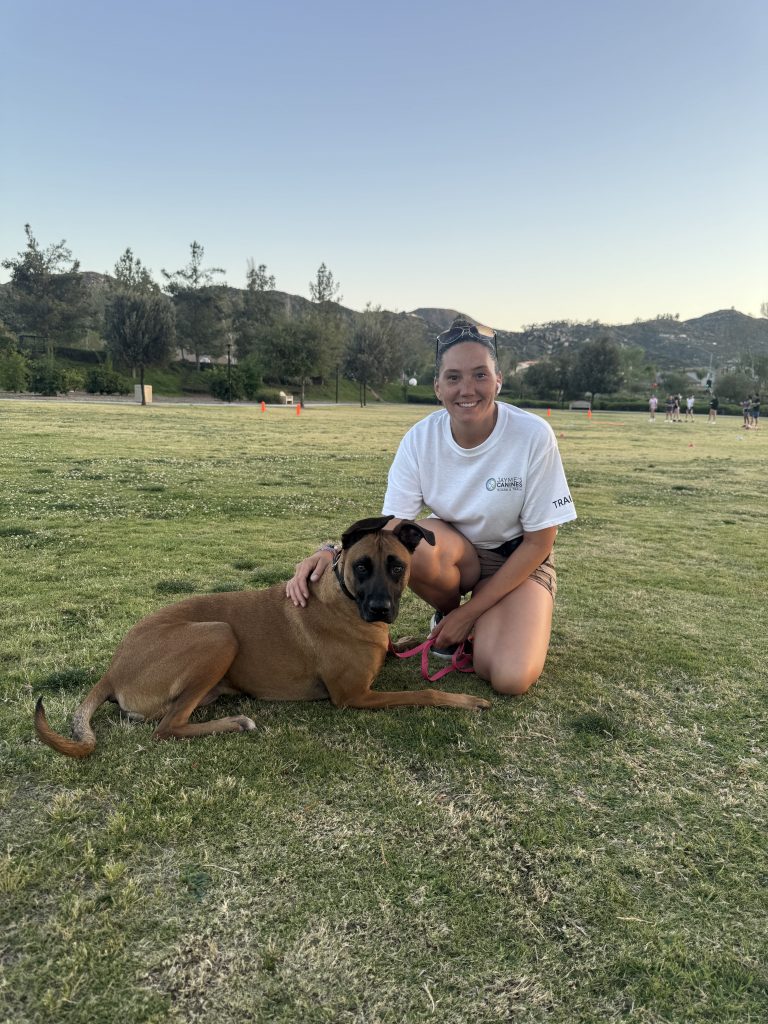
What Is Balanced Training?
Balanced training means I’m not limited to just one philosophy or method. I don’t just use treats. I don’t just use corrections. I use the right mix of communication, structure, motivation, and tools based on what each individual dog needs.
Some dogs need more confidence. Some need rules and clarity. Some need both.
The goal is to create a well-rounded, stable dog not a robot, not a people-pleaser, but a dog who understands the world around them, can make good choices, and feels secure in their role at home and in public.

My Journey: Where It All Began
I’ve been working with dogs for over 10 years, starting with my own, then friends’ and family members’ dogs. Training came naturally to me, long before I ever did it professionally. I’ve always had a gift for reading dogs and understanding their behavior, even when I didn’t have all the tools or experience yet.
But one of the biggest turning points was when I got Boss, my first dog on my own. I was in my 20s, trying to juggle life, a business, and now a very reactive, intense dog who wasn’t a fan of other dogs. I was doing my best, but I didn’t know how to truly help him.
Eventually, I sent Boss to a board & train program, and when he came back, everything changed. He was clearer, calmer, and more confident. But the real work? That happened after. I kept up with the training. I stayed consistent. That’s when I really saw the transformation.
I always tell clients: it’s not just about sending your dog away, it’s about what you do when they come home.
I Didn’t Always Use Tools — And I Wish I Had
To be honest, I was nervous about tools in the beginning. I avoided prongs and e-collars because I didn’t understand them. I thought they were harsh or unnecessary. Looking back now, I wish I could go back and make my dogs’ lives easier by using those tools sooner, but I didn’t know what I didn’t know.
I’ve made mistakes. I’ve reinforced bad behaviors. I’ve waited too long to step in. But that’s how I know what I know now. That’s how I can guide owners from a place of experience, not judgment. You don’t have to feel bad if you didn’t get it perfect…neither did I.

Let’s Talk About Tools
Tools don’t replace training. But they can help make communication faster, clearer, and more fair—especially for high-drive, anxious, or reactive dogs. Here’s a quick breakdown of some of the tools I may use and recommend:
E-Collar (Remote Collar)
This is not a “shock collar.” A modern e-collar delivers a low-level muscle stimulation, similar to a TENS unit used in physical therapy. It’s used to communicate at a distance, especially for recall, off-leash reliability, or dogs who shut down with leash pressure.
It’s not about zapping your dog—it’s about layering communication they already understand from leash work, just from farther away. Most dogs trained properly on an e-collar respond to the lowest setting—some even sleep through it during testing because it’s so mild.
Prong Collar
This tool looks intense—but when fitted and used correctly, it’s one of the most gentle and effective ways to guide a dog and create leash communication. The prongs evenly distribute pressure around the neck (versus a flat collar that puts all the force on the throat), making it clear, quick, and safer for both the dog and handler.
Again—it’s not about pain. It’s about timing and direction.
Slip Lead
Simple but powerful. Slip leads create natural pressure and release, helping guide dogs gently while teaching them to focus. I often use this with new dogs as a foundation tool—it helps me communicate clearly while keeping things calm and minimal.
Tools Are Not the Goal—Understanding Is
At the end of the day, tools are just tools. They don’t train your dog—you do. The leash, the collar, the reward—they’re just ways to have a conversation. And a good trainer knows when to use what, how to introduce it properly, and when to take it away.
Your dog isn’t a robot. And they shouldn’t be trained like one. They’re emotional, instinctual, intelligent animals—and they deserve communication that makes sense to them. Balanced training allows us to honor the dog in front of us—not just the method we feel attached to.
No Judgment, Just What Works
One of the most important things I tell my clients is: I’m not here to judge. Whether your dog jumps on everyone, pulls like a train, or lashes out at other dogs—I’m here to help, not shame.
I’ve been there. I’ve had dogs that overwhelmed me. I’ve made mistakes. I’ve waited too long. That’s why I’m patient. That’s why I take my time. And that’s why I help people feel confident with the tools and techniques we choose—not ashamed.
Final Thoughts
Balanced training isn’t about being right. It’s not about choosing sides. It’s about choosing the right path for each individual dog—and helping their owners feel supported, educated, and confident.
If your dog is struggling, you don’t have to follow TikTok trends or feel guilty for needing help. You just need the right guide, the right tools, and a clear plan.
And I’m here to help you find that.
Please visit my Facebook page for more information about my services